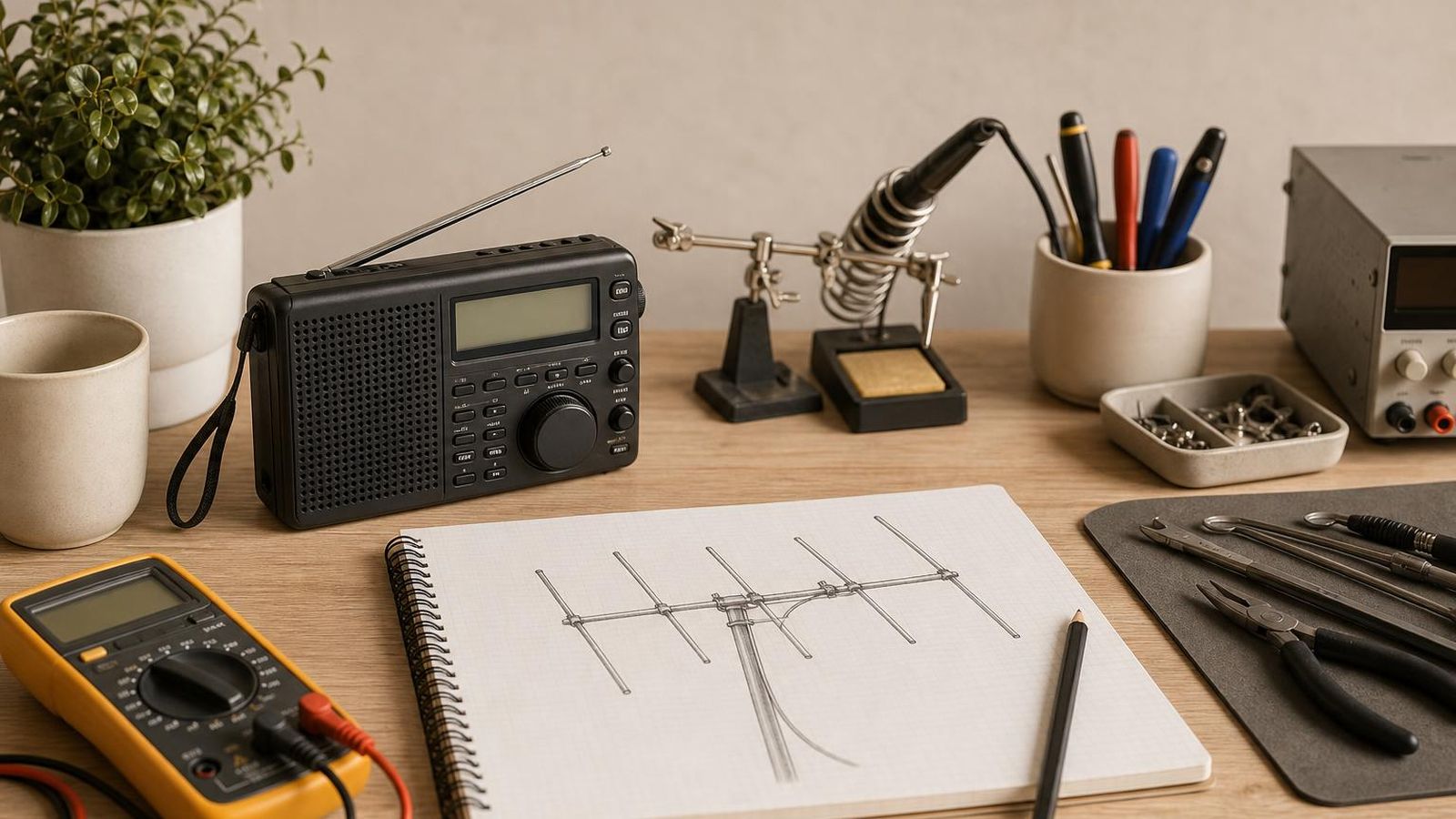
Radio and electronics
A bench full of intermittent faults is almost always a bench with poor discipline, not a bench with cheap parts. Most of the difficult problems in small radio and electronics work come from grounding, dirty connectors, and measurements taken in the wrong place. Sort those out and the gear suddenly behaves.
This section ties together notes from across the library, including Radiosmila, the Yagi antenna notes, and the broader technical systems pages at ats.se-ua.net.
Bench discipline
A working bench has, in order: a clean surface, a known-good supply, a known-good ground point, a meter you trust, and one project on it at a time. That last one is the hardest to keep. Two projects on the same bench will share cables, share noise, and share blame for each other's faults.
Before changing a part, change the assumption. Verify the input. Verify the supply. Verify the load. The component you suspect is usually the symptom, not the cause.
Antennas as a starting point
A Yagi is one of the clearest places to learn antenna behaviour because everything you do shows up on the meter. Element spacing changes the gain. Element length changes the resonance. Boom material can change the pattern if you ignore it. The Yagi notes in this library cover the practical end of that.
A Yagi will only ever be as good as its connector. A perfect mechanical build with a tired connector at the feed point will measure badly. Replace the connector before suspecting the elements.
Receivers and signal chains
A receiver problem is almost always one of: antenna feed, front-end overload, supply ripple, or wrong gain staging. In that order. Tearing into the IF stages first usually wastes hours.
A short bench routine that catches most issues:
- Confirm supply rails with a meter.
- Inject a known signal at the antenna port.
- Move through the stages with a known-good probe.
- Stop where the signal disappears or distorts.
Safety - the non-negotiable
A radio bench has small things that can hurt you: stored charge in capacitors, hot transformers, sharp wire ends. A short list of habits that prevents most accidents:
- discharge capacitors before reaching in
- one hand in the chassis at a time when power is up
- keep the iron on a stand, not on the bench
- use safety glasses when clipping leads
Common mistakes
- swapping parts before measuring
- trusting a power supply because the LED is on
- long meter leads adding their own errors
- ignoring connector cleanliness
- changing two things at once
Where to go next
Two-minute checklist
- Verify supply rails.
- Verify input signal at the right point.
- Check grounding and connectors.
- Measure before changing parts.
- Document the working configuration before changing anything.